
News
MINAE and MAG launch TRANSFORMA-INNOVA Program within the framework of cooperation with Germany and the European Union
Program seeks to create low-carbon and climate-resilient production systems.
- TRANSFORMA-INNOVA seeks to impact agricultural, livestock and fishery-aquaculture sectors.
- The multi-donor program is funded by the Government of Germany through its International Climate Initiative (IKI) and by the European Union.
- The program will be implemented by the German Cooperation - GIZ in partnership with CATIE, Conservación Internacional, CRUSA Foundation, FUNBAM and UNDP.
For Costa Ricans to be able to acquire more climate-friendly products is one of the goals of the TRANSFORMA-INNOVA Program: transformative low-carbon and climate-resilient routes in Costa Rica, which integrate the initiative "Climate-smart agriculture and value chains" on mitigation and adaptation to climate change.
The Ministry of Environment and Energy (MINAE) and the Ministry of Agriculture and Livestock (MAG), together with its associated institutions the National System of Conservation Areas (SINAC) and the Costa Rican Institute of Fishery and Aquaculture (INCOPESCA), are the ministries that will lead the program, hand in hand with the German Cooperation for Development (GIZ), which will implement the program in partnership with the Tropical Agricultural Research and Higher Education Center (CATIE), Conservación Internacional (CI), CRUSA Foundation, Environmental Bank Foundation (FUNBAM) and the United Nations Development Program (UNDP).
Climate-smart agriculture
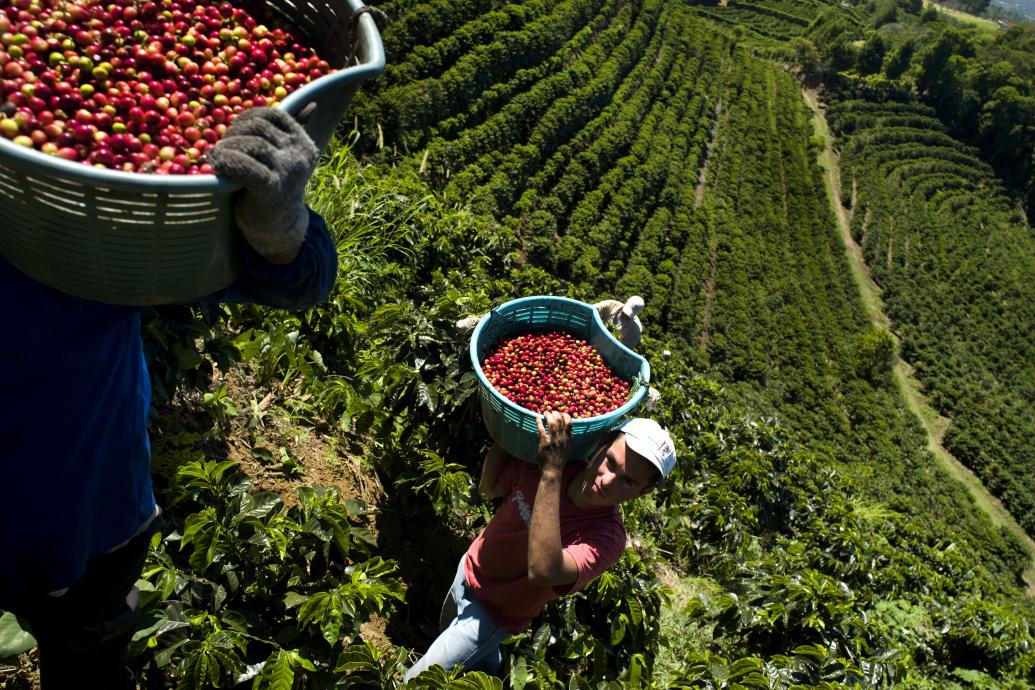
TRANSFORMA-INNOVA will work on strengthening NAMAs (Nationally Appropriate Mitigation Actions) in coffee, livestock and banana and abaca crops (Musaceae) to promote the development of low-carbon and climate-resilient production systems in Costa Rica. In this way, it is expected to support the Nationally Determined Contributions (NDC) and its National Decarbonization Plan, which are international commitments of the country.
"In Costa Rica, the first NAMAs, originated in 2013, were already proposed as dual projects, mitigation and adaptation, aimed at improving the economic performance of value chains, generating co-benefits in biodiversity. Today, we also aim to contribute to differentiating our agricultural production in international markets,” said the Minister of Agriculture and Livestock, Víctor Carvajal Porras, who added that the TRANSFORMA-INNOVA Project is seen as a key companion to advance on that path for the next four years.
Likewise, Carlos Isaac Pérez Mejía, Deputy Minister of Strategic Management of MINAE said: "This project fills us with satisfaction because it will enable us to bring economic co-benefits to small producers, fishing communities and families, while helping to improve, based on their needs, climate resilience and long-term sustainability and, thus, generate environmental benefits, thanks to the support of the German government and the joint work with the Ministry of Agriculture and Livestock and INCOPESCA".
Blue Economy: sustainability and coastal resilience
The TRANSFORMA-INNOVA program also seeks to boost the development of the livelihoods of coastal communities through the preservation and equitable and sustainable management of coastal marine resources.
This objective will be achieved through the promotion of transformation towards sustainability in fishery and aquaculture (blue) value chains, effective management of mangrove ecosystems and marine spatial planning, work to be developed directly with communities, local actors and relevant authorities.
"At INCOPESCA we are convinced that through this initiative we can make progress in actions to improve the livelihoods of coastal communities, the sustainable use and preservation of marine and coastal resources, the promotion of value chains within the framework of blue economy and those business opportunities that allow economic reactivation, as well as the generation of employment in coastal areas, in order to promote development and preservation in balance,” said Heiner Méndez Barrientos, Minister of Fishery and Aquaculture and Executive President of INCOPESCA.
Through the development of training and communities of practice, it is intended to actively involve these sectors whose livelihood is linked to agriculture, livestock and marine production, so that through the program they can learn to manage the resources that sustain them in a sustainable manner and in balance with the environment.
TRANSFORMA-INNOVA strives for these populations to participate in developing better production practices that help fight climate change by reducing carbon emissions and, at the same time, increase yields. Agricultural producers and fishing communities are intended to ensure good income through marketing enabling to retain the value of the products.
TRANSFORMA-INNOVA seeks to contribute to the improvement of the population’s living conditions
One of the main impacts sought by the TRANSFORMA-INNOVA program is the improvement the quality of life of small producers, coastal communities, women, children and young people who are exposed to risks due to the effect of climate change and who have limited means to face them.
Financing
The TRANSFORMA-INNOVA program will be implemented between 2022 and 2026 and is funded by the German Federal Ministry for the Environment, Nature Conservation and Consumer Protection (BMUV) through its International Initiative IKI and the European Union.
"The Federal Republic of Germany finances TRANSFORMA-INNOVA with a total of 12.5 million euros. This is money well invested, as it supports Costa Rica's decarbonization and modernization policies in various areas such as agriculture, marine protection and transport," said Daniel Kriener, ambassador of Germany.
María Antonia Calvo Puerta, ambassador of the European Union, pointed out that "the European Union is contributing 4.15 million euros to TRANSFORMA-INNOVA to bring about changes in the production systems of Musaceae, coffee and livestock in order to move towards sustainable, climate-resilient and low-emission value chains".


